
How HopeKids Helped One Family Keep Going Through 14 Years of Sickle Cell Disease
When Virnetra was two weeks old, her mother Delois learned that her daughter had sickle cell disease. What followed was fourteen years of pain crises, hospitalizations, and a life shaped by a condition that made ordinary childhood activities feel out of reach.
Through most of those years, HopeKids was there. And when a medical breakthrough finally changed everything, the foundation that HopeKids had helped build made the road forward a little less uncertain.
What sickle cell disease actually takes from a child
Sickle cell disease causes red blood cells to take on a crescent shape, making it difficult for blood to move through the body. For children living with it, the result is severe pain, fatigue, a higher risk of infection, and constant medical management.
For Virnetra, it meant that simple things were impossible. Karate lasted until the pain stopped her. So did soccer. And gymnastics. Cold weather could trigger a pain crisis, which is how the family discovered just how serious the condition was when Virnetra was four and they had recently moved to Minnesota. Their first blizzard ended with her in the hospital.
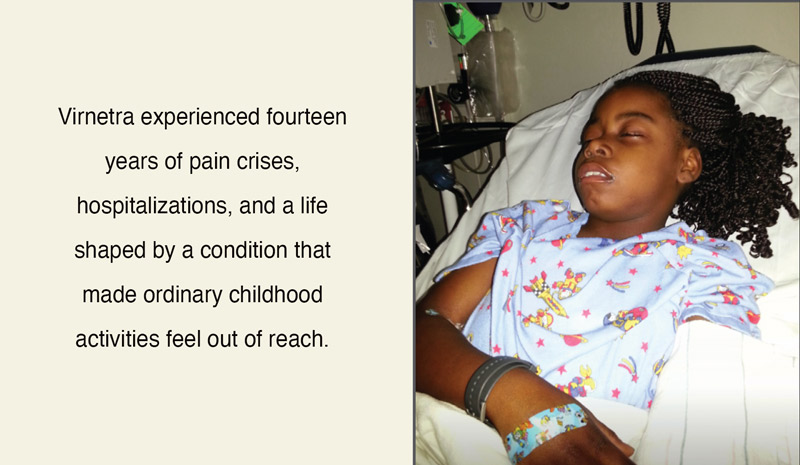
“She wanted to do everything other kids were doing, but it just wasn’t possible,” said Delois. “She would try, but the pain would stop her. Eventually, she didn’t want to go outside anymore or do anything. It led to depression and anxiety. She even struggled in school because she didn’t want to explain why she missed so many days or why she was always in the hospital.”
What HopeKids provided that nothing else could
Every event HopeKids offers is completely free of charge.
This matters more than it might seem. Families navigating a child’s life-threatening medical condition face financial pressures that go far beyond medical bills, including missed work, transportation costs, meals eaten on the go near a hospital, and the simple reality that planning and paying for anything extra just isn’t feasible. HopeKids removes that barrier entirely.
And it’s not just for the child who is sick. HopeKids intentionally serves the whole family, mom, dad, and siblings, because childhood illness affects everyone. Siblings, in particular, can be quietly overlooked when so much attention is directed toward their brother or sister’s care. At HopeKids, they are seen, included, and celebrated.
How HopeKids builds community for families who have a child with a life-threatening medical condition
There’s something that happens when a family walks into their first HopeKids event that’s difficult to describe until you’ve seen it. Kids who are bald, wearing a mask, or using a wheelchair don’t get stared at. They belong. Parents don’t have to explain their situation or brace themselves for uncomfortable questions. Everyone in the room already understands.
That sense of safety and acceptance isn’t accidental. HopeKids events are often held privately, protecting immunocompromised children from the health risks of large public crowds. And within the community, families look out for each other, knowing that coming down with something as minor as a cough means staying home to ensure others stay safe. That shared understanding creates something rare: a space where these families can relax and just be themselves.
A gene therapy trial, and four years of waiting
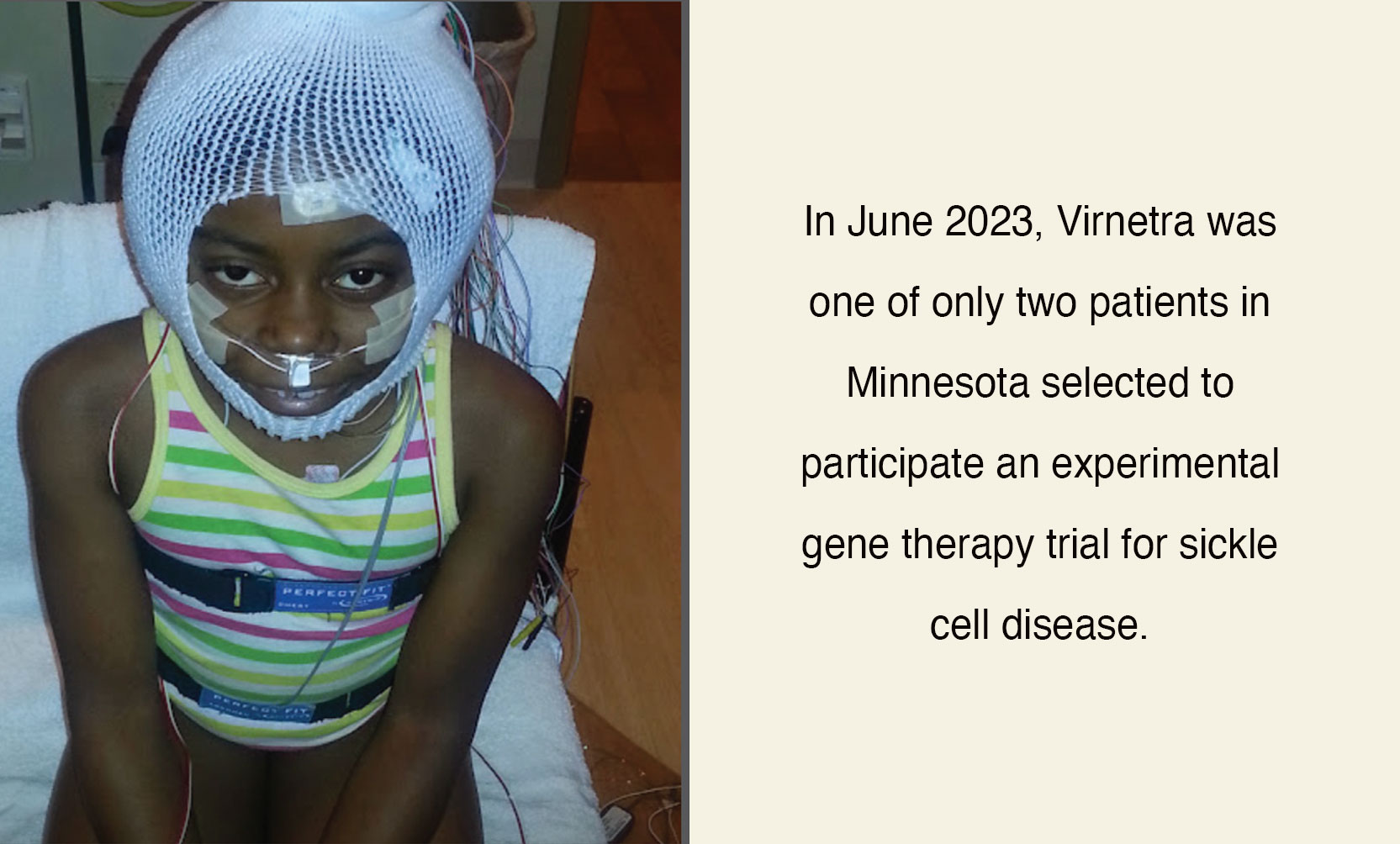
In 2018, when Virnetra was 13, her family learned about an experimental gene therapy trial for sickle cell disease. Her doctors believed she was a candidate. The process that followed was intensive: MRIs, CAT scans, EKGs, and a painful stem cell collection procedure.
And then, just before they were ready to move forward, the trial was put on hold due to complications with other patients overseas.
They waited for four years.
Four years of more pain crises, more hospital stays, more of the same daily reality they had been managing since Virnetra was born. They held onto the possibility that the trial would resume.
In June 2023, it did. Virnetra was one of only two patients in Minnesota selected to participate. She completed the entire process again from the beginning, including chemotherapy and bone marrow collection. By November, her results were confirmed.
What life looks like after a cure
The first thing Virnetra did that she had never been able to do before was go outside in the rain without fear.
From there, the list grew. Swimming. Flying on an airplane. Spending time with friends without planning around her condition. She began thinking about a career in the Army, something that had been entirely out of reach before.
“She’s been given a new life,” said Delois. “There are so many things she can do now that she couldn’t before.”
The impact extended to the whole family. Virnetra’s siblings could come home from school without worrying about finding out she had been hospitalized. Delois could focus on her career again. The weight that had shaped every corner of their lives for fourteen years began to lift.
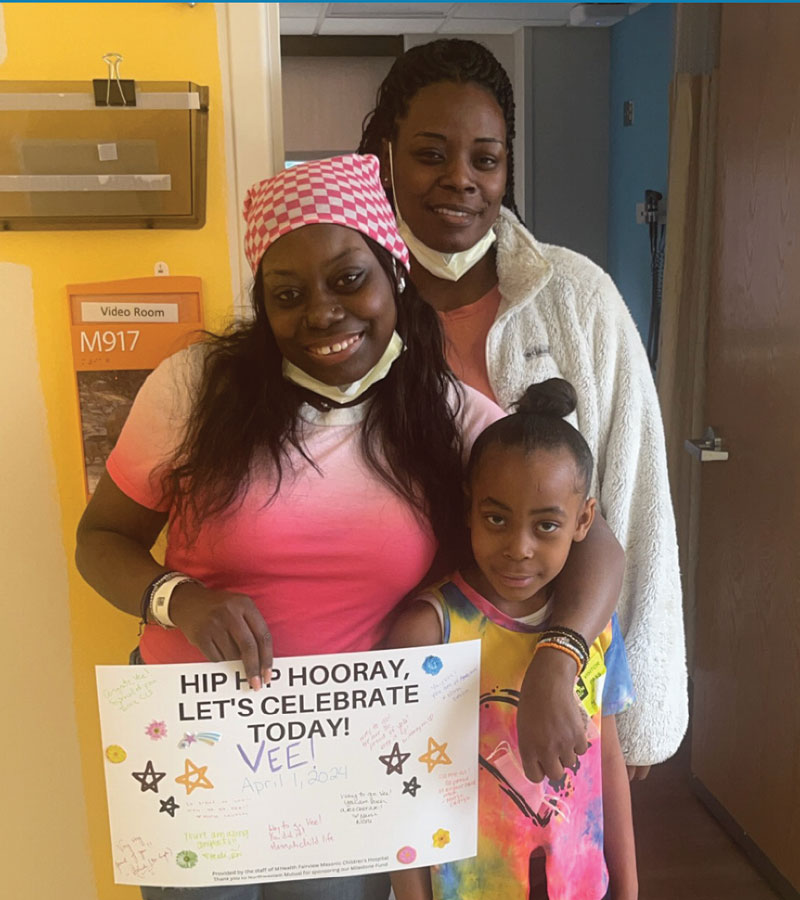
This December marked Virnetra’s first birthday in fourteen years that was not spent in a hospital.
“This is the first time in fourteen years that she’ll have a birthday that isn’t spent in the hospital.” — Delois
Learn more or apply to HopeKids
If your family has a child between the ages of 0-18 with a life-threatening medical condition and you want to learn more about HopeKids, visit hopekids.org. If you’d like to support families like Virnetra’s, you can make a one-time gift or join the Hope365 monthly giving program at hopekids.org/donate.
Frequently asked questions
What is HopeKids?
HopeKids is a nonprofit organization that provides ongoing events, activities, and a powerful, unique support community for families who have a child with cancer or some other life-threatening medical condition. We surround these remarkable children and their families with the message that hope is a powerful medicine.
Who is eligible to join HopeKids?
HopeKids is open to any family who has a child between the ages of 0-18 with a life-threatening medical condition, including sickle cell disease, cancer, heart conditions, muscular dystrophy, and many others. The program welcomes all families regardless of background, religion, ethnicity, or any other factor.
Does it cost anything to participate?
No. All HopeKids events and activities are completely free for participating families. There are no fees to apply, no cost per event, and no limit on how often a family can participate.
What kinds of events does HopeKids offer?
HopeKids hosts a wide range of events throughout the year, including sporting events, concerts, theater shows, museum visits, cooking classes, parent date nights, and more. For families who cannot attend in person, HopeKids also offers virtual events that can be joined from home or a hospital room.
Can the whole family participate, or only the child who is diagnosed?
The whole family is welcome. HopeKids serves the diagnosed child, parents, and siblings, because we know that a life-threatening diagnosis affects every person in the household. The diagnosed child doesn’t even need to be in attendance for other members of the family to enjoy the event. Take, for example, a moms’ book club, a dads’ golf outing, or a sibling attending an event on their own when the HopeKid isn’t feeling up for it. It’s all welcome at HopeKids.
Can families stay in HopeKids after a child finishes treatment or reaches remission?
Yes. Families can remain part of HopeKids for as long as they choose, even after a child finishes treatment, reaches remission, or turns 18. Many alumni stay connected and choose to give back by supporting newer families who have just received a diagnosis.
How is HopeKids funded?
HopeKids is supported by individual donors, corporate sponsors, foundations, and community partners. About 87 percent of revenue goes directly to programs and services. In-kind donations such as event tickets, meals, and experiences help stretch every dollar further. A $50 monthly gift through the Hope365 program can provide one family with an unlimited calendar of free events for an entire year.
How do I apply to HopeKids?
Families can apply by visiting hopekids.org/become-a-hopekid.